The Enterprise Intelligence Layer
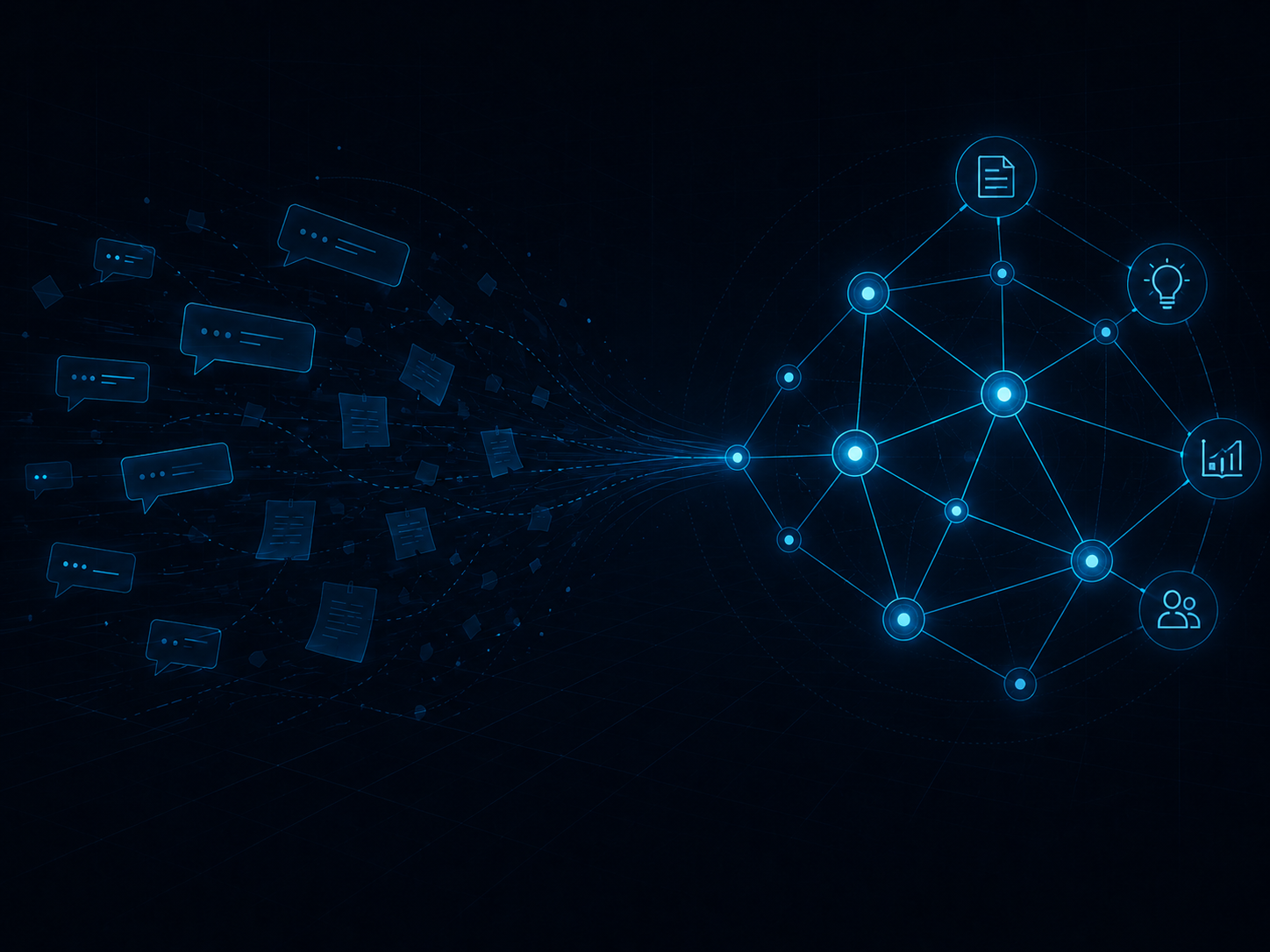
Every organization already has systems of record (Salesforce, ERP, the data warehouse) and systems of engagement (email, Slack, the ticketing tool). Almost none of them have a system of intelligence, the layer that connects intent to outcome.
The layer nobody owns
Between "the business wants X" and "the system now does X" sits an enormous amount of tacit work: interpretation, negotiation, sequencing, verification. Today that work lives in people's heads and in scattered documents. It is the least instrumented part of the entire delivery pipeline.
The Enterprise Intelligence Layer is the idea of making that work explicit, queryable, and reusable.
What it holds
It holds intent, meaning the actual goal rather than the ticket text. It holds the context around that goal: the constraints, the history, and the decisions that shape a solution. It tracks coordination, who is doing what and what they're waiting on. And it keeps a memory of what worked, what didn't, and why.
Why AI changes the economics
Maintaining this layer by hand was always too expensive, so we didn't. Models change the math. They can read the whole history, summarize the state, surface the decision that matters, and keep the map current as work moves.
The layer stops being documentation nobody updates and becomes infrastructure that stays alive.
The build sequence
You don't buy this layer, you grow it. Start by capturing intent and context where the work already happens. Make it retrievable at the moment someone has to decide something. Then close the loop, feeding outcomes back so knowledge compounds.
The rest of this series digs into each step.