Why Vibe Coding Isn't Enough
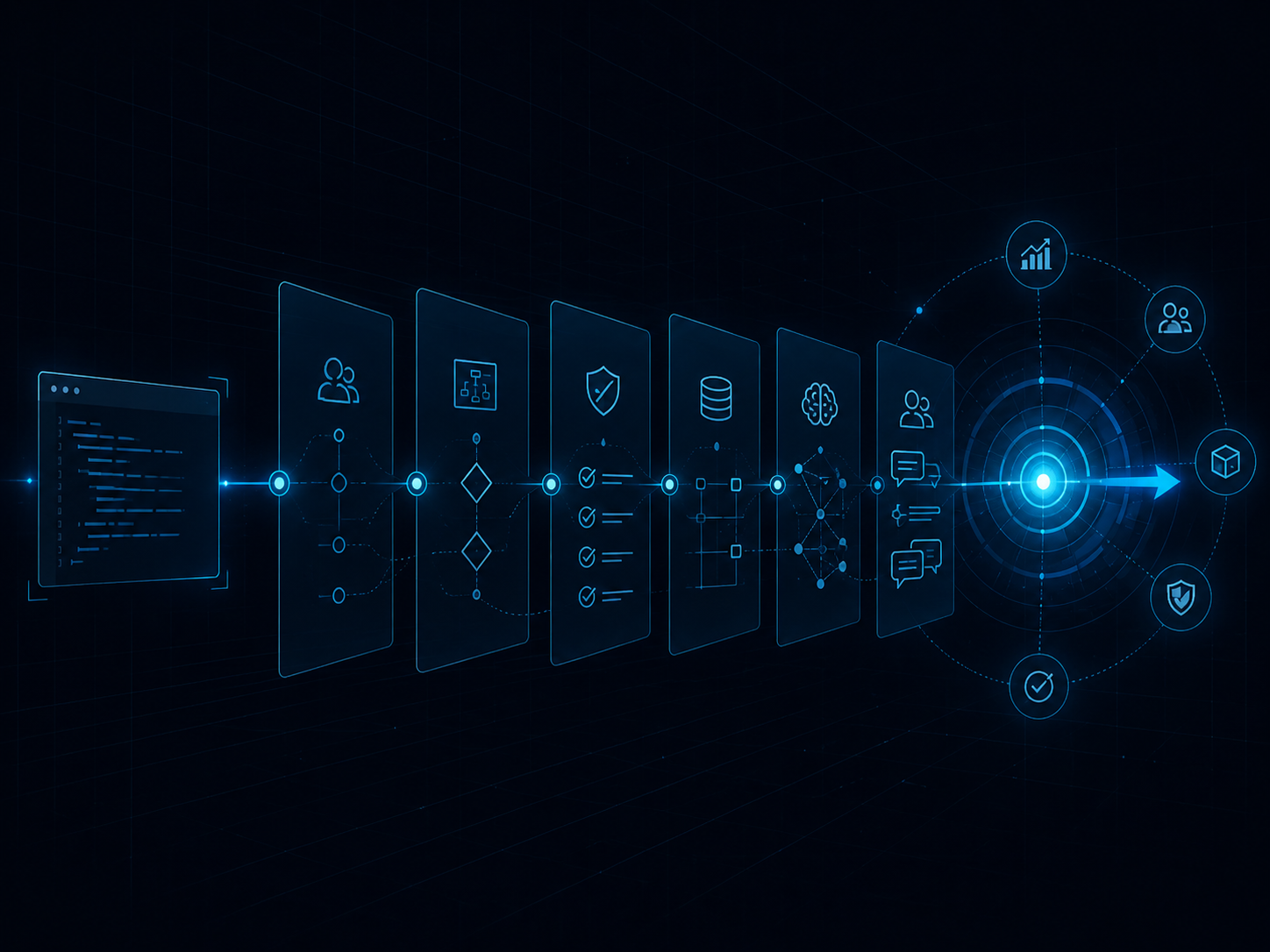
Vibe coding, where you describe what you want and a model writes the code, is genuinely remarkable. For a prototype or a weekend script, it collapses hours into minutes.
But enterprise software has rarely failed because a developer couldn't write a function. It fails upstream and downstream of the code, in the gap between what the business meant, what got built, and what actually shipped.
The task is not the mission
Writing code is a task. Delivery is the mission, and the mission is a much bigger job. You have to find the real problem sitting behind the stated request. You have to coordinate a dozen people who each hold one piece of the truth. You have to preserve decisions so nobody re-litigates them every sprint. Then you have to get the thing into production without breaking the last thing you shipped.
A model that writes flawless code leaves all of that untouched.
Where the failures actually live
After twenty years of enterprise Salesforce delivery, the pattern is consistent, and it has nothing to do with typing speed. The "why" behind a requirement evaporates somewhere between refinement and build. More time goes into syncing than into building. Knowledge never compounds, because every project starts from scratch again.
None of that is a coding problem. It's a delivery problem.
Toward vibe delivery
The interesting question isn't whether AI can write the code. It's whether AI can hold the context, coordinate the work, and carry the knowledge forward, so that delivery itself becomes fluent.
That's the shift I'm researching: from vibe coding to vibe delivery. The next essays work through what it actually takes.